

Planning Rules for Resin Bound Driveways in the UK: Do You Need Permission?
Thinking about a resin bound driveway and wondering if you need planning permission? The good news for most UK homeowners, especially across the West Midlands, is that a correctly specified resin bound driveway will usually fall under permitted development and won’t require formal planning consent. The key is permeability and appropriate drainage. Here’s a clear guide to the rules, how they apply in practice, and when to speak to your local authority.
The golden rule: permeability and SUDS Since 2008, the UK has encouraged Sustainable Drainage Systems (SUDS) for front garden paving to reduce flood risk. The headline points:
- Permeable surfacing: If your new or replacement driveway uses a permeable surface, such as a resin bound system laid over a suitable permeable base, or drains water to a permeable area within your property, it generally does not require planning permission.
- Non‑permeable surfacing: If the surface is non‑permeable (e.g., traditional concrete, resin bonded, or sealed tarmac) and does not drain to a permeable area within your boundary, planning permission is typically required for areas over 5 square metres.
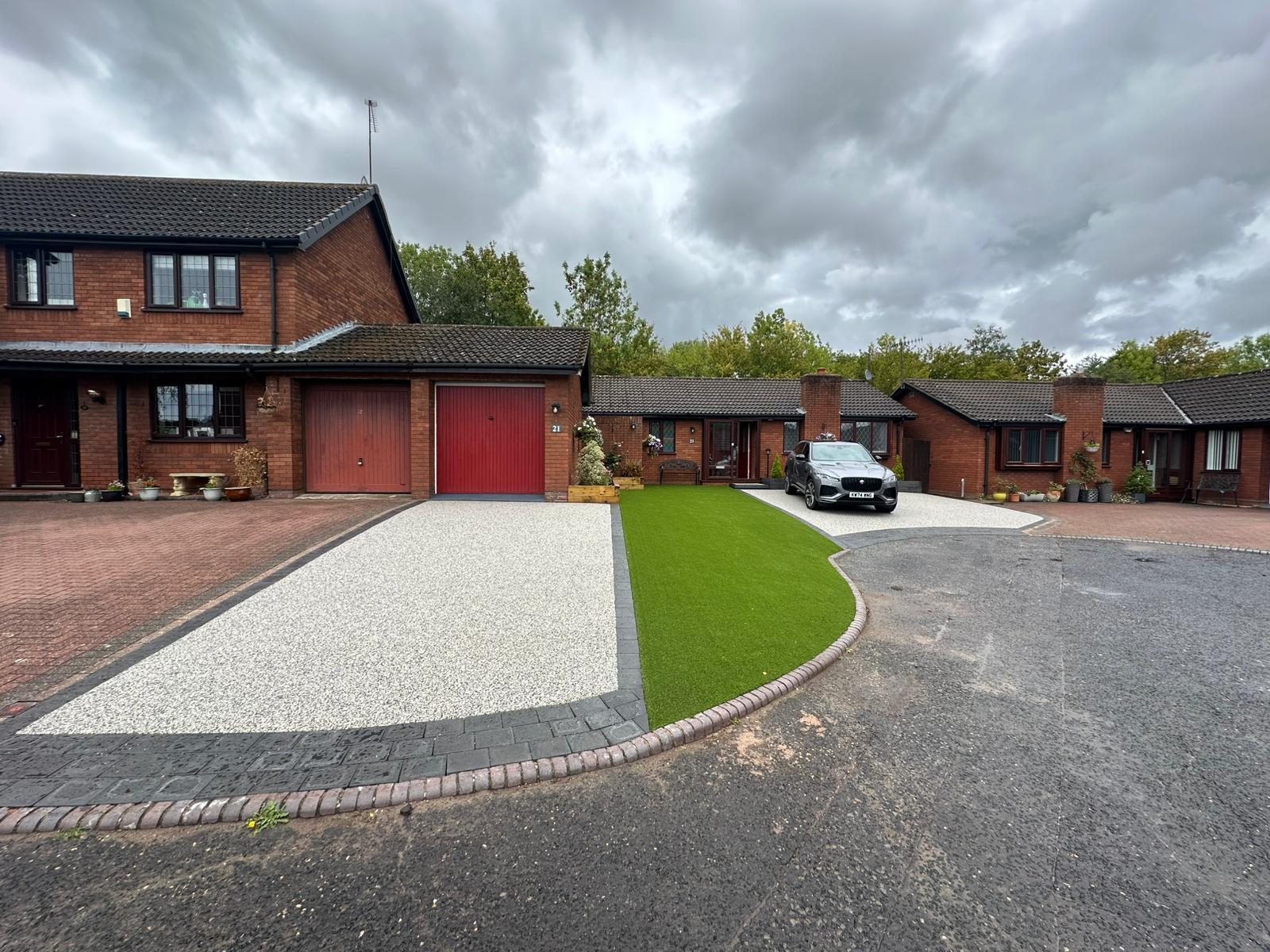
Base design matters as much as the surface A resin bound layer alone doesn’t guarantee compliance; permeability is a full‑system outcome.
- Typical permeable build‑up: Permeable sub‑base (Type 3/Opengraded), geotextile layers, potential Attenuation/voided sub‑base, open‑graded asphalt binder course, and 15–18 mm resin bound wearing course.
- Existing bases: If you’re overlaying sound concrete or dense tarmac, your installer must provide managed drainage to permeable ground within your property (e.g., soakaways, rain gardens, channels draining to a permeable area) to avoid the need for permission.

Dropped kerbs and vehicle access If you need a new or wider dropped kerb to access your drive:
- You must apply to your local highway authority. This is separate from planning permission and has its own standards for construction, visibility and drainage.
- Works on the pavement/highway must be undertaken by approved contractors.
Drainage do’s and don’ts
- Do keep all surface water within your boundary and allow it to infiltrate permeable ground.
- Do include a fall away from your property and threshold details to protect damp courses.
- Don’t pipe water directly into the public sewer without approval.
- Don’t block soakaways or drains with silt—regular maintenance keeps systems compliant.
Resin bound advantages for compliance
- SUDS‑friendly: Provides a porous wearing surface when paired with a permeable base.
- Aesthetics: Wide choice of colours that satisfy conservation preferences in many areas.
- Longevity: Low maintenance when kept free of debris to maintain permeability.
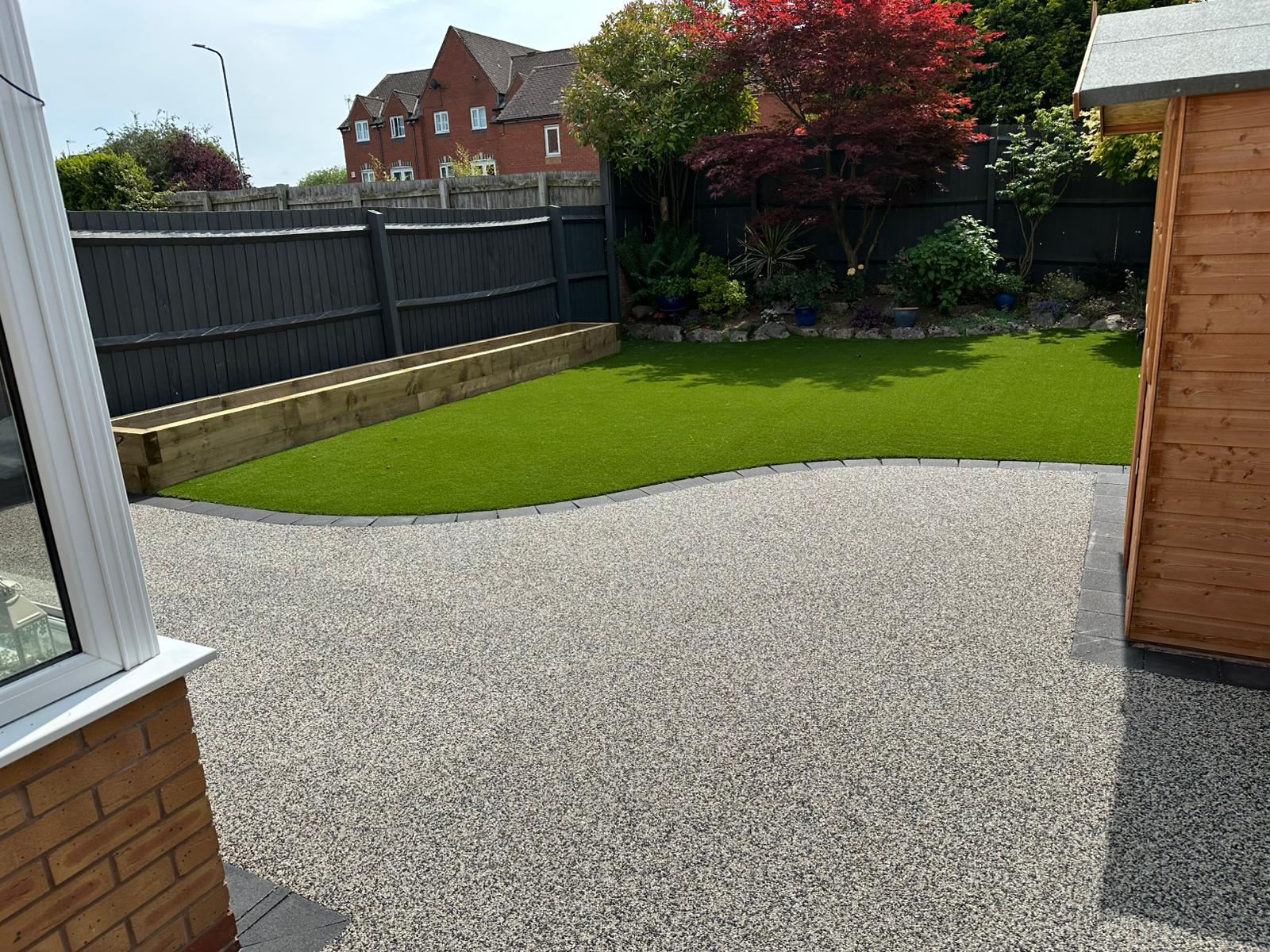
Local authority nuances in the West Midlands Policies align with national guidance, but details can vary between Birmingham, Wolverhampton, Dudley, Solihull, Walsall and Coventry councils—particularly for conservation zones, tree root protection, and highway crossovers. A quick pre‑application enquiry or installer‑led check avoids delays.

Resin bound vs resin bonded (planning impact)
- Resin bound: When properly installed with an open‑graded asphalt or permeable sub‑base (e.g., MOT Type 3 with appropriate geotextiles), resin bound forms a permeable surface. In most cases, no planning permission is needed.
- Resin bonded: This is not permeable. If water will run off to the public highway or sewers, planning permission may be required unless you integrate adequate on‑plot drainage to permeable ground.

When planning permission may be required
- You’re proposing a non‑permeable surface over 5 m² that drains to the road or mains drains.
- You’re in a sensitive area (e.g., conservation area or listed building) where local policies impose stricter controls on materials and appearance.
- Significant changes to levels/kerbs affect access or highway visibility splays.
- You’re creating a new or widened vehicular crossover (dropped kerb). This usually needs separate approval from the local highway authority, regardless of surface type.
Permitted development scenarios (typical)
- Replacing an existing driveway with a permeable resin bound system over a suitable base: permission usually not required.
- Converting a front lawn to a resin bound driveway with a compliant permeable build‑up: permission usually not required.
- Retaining a non‑permeable base but adding drainage (channels and soakaway) within the curtilage: often acceptable without permission, provided runoff is contained on your property.

Common misconceptions
- “Resin bound never needs permission.” Usually not—but if it’s laid over a non‑permeable base with no on‑plot drainage, or you need a new dropped kerb, approvals may still apply.
- “Any resin surface is permeable.” False. Resin bonded is not permeable; resin bound is permeable only with the right base.
- “If my neighbour did it, I can too.” Local site conditions (soil infiltration, slopes, tree roots) differ; get site‑specific advice.
How Consumer Resin keeps you compliant
- Site survey: Assess base condition, ground levels, infiltration potential and existing drainage.
- Design proposal: Recommend a permeable build‑up or on‑plot drainage solution if overlaying a non‑permeable base.
- Local guidance: Advice aligned to your council’s expectations, and signposting for dropped kerb applications where needed.
- Quality install: UV‑stable resin, appropriate aggregates and correct thicknesses for durability and ongoing permeability.
Want a compliant, great‑looking driveway without the paperwork hassle? Book a free, no‑obligation site survey with Consumer Resin and get a design that meets local rules and looks the part.

